TinySea
About
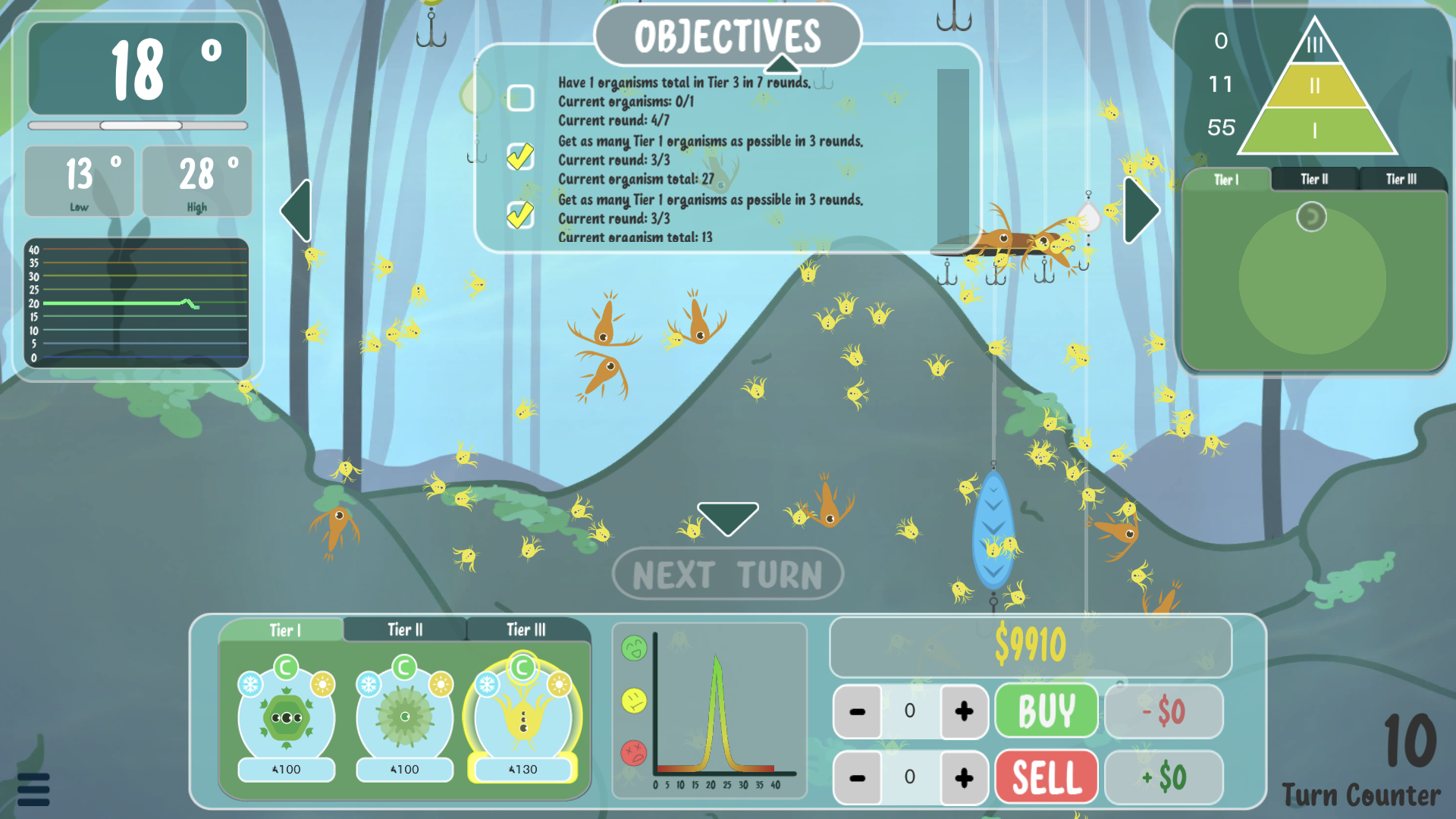
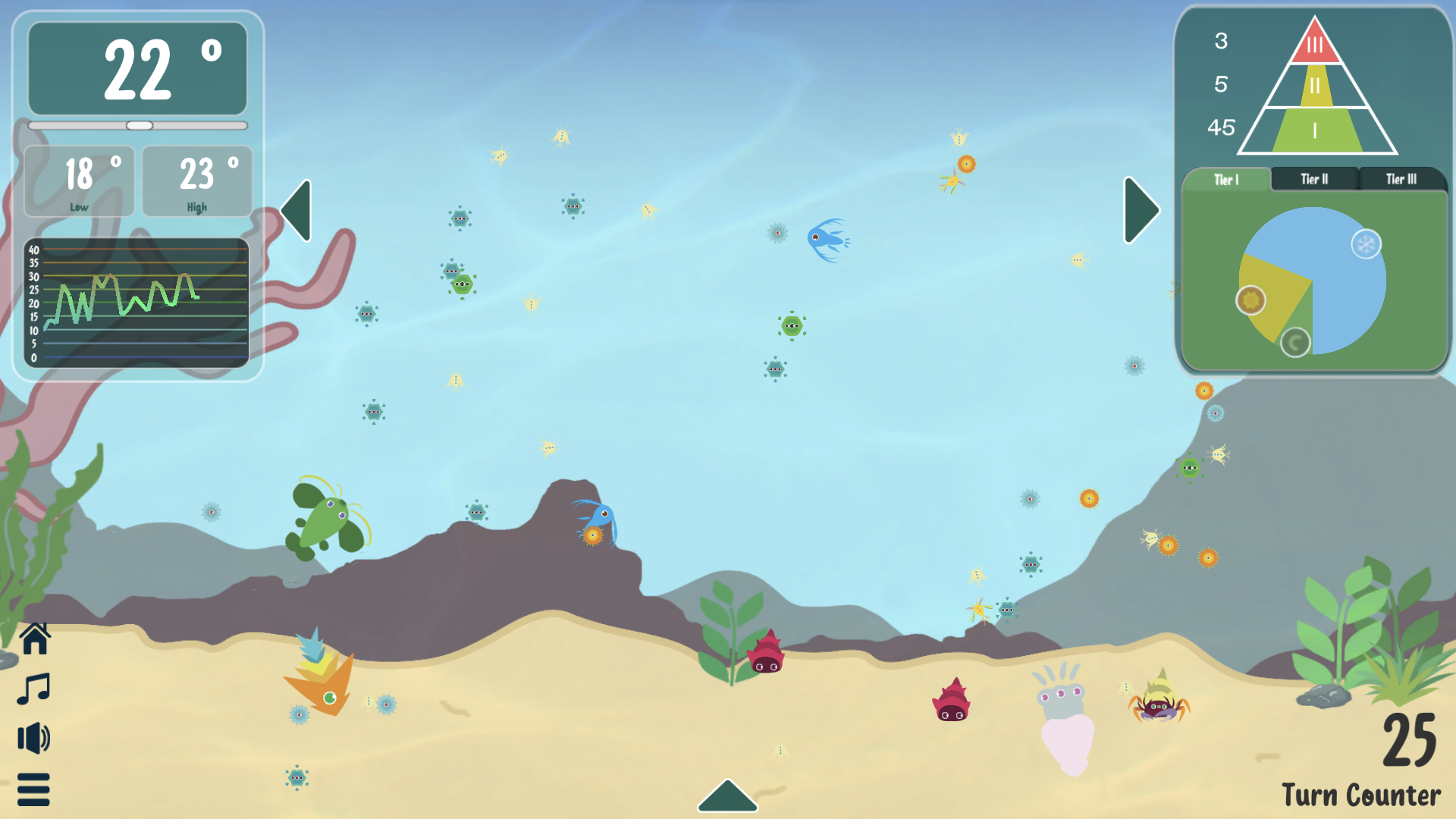
TinySea is an aquaculture enclosure simulator aimed at teaching middle school students about how to properly raise creatures in an aquaculture farm. The player is challenged to overcome various environmental factors such as food pyramid balance, temperature, and climate change.
While the game started development in 2017, TinySea has seen continuous development since 2022 with playtests in classrooms occurring in 2022 and 2023.
Role: Programmer, Designer
Time on Project: May 2022 - present
Engine/Language: Unity | C#
Platforms: PC
Link: https://playtinysea.com/
Contributions
Developed level design tools to create levels in the Unity inspector
Designed the game’s level structure and gameplay objectives
Integrated data collection system that writes to AWS server
Optimized game performance in web browsers
Implemented complete gameplay UI overhaul
Adjusted gameplay balance based on user testing and feedback
Co-coordinated playtest sessions with middle school students
Lessons
TinySea was the first game that I was assigned to as part of my internship at Ghostlab. When I started working on the project, I was the only programmer on the team.
The largest takeaway from this project was communicating with a cross-disciplinary team. The team was made up of game developers, researchers, marine scientists, and educators. When designing and developing features, open and clear communication was the most important part of the process. I had to make sure that what I was creating was both scientifically accurate and fit the learning goals for the game. Additionally, I also had to be the voice of the programmer during discussions - to those with no game development background, I had to make sure they knew what was possible and wasn’t possible within certain timeframes.
Another important lesson I learned from TinySea is how to learn what I don’t know. As I was still a student, some things I needed to develop for this game were either the topics of courses I hadn’t taken yet or weren’t included in my course plan. As the solo developer, my options for in-lab help was also limited. Navigating online resources and documentation became imperative to the project’s success, which is a skill I use actively on all my projects.