Chrysalis
About
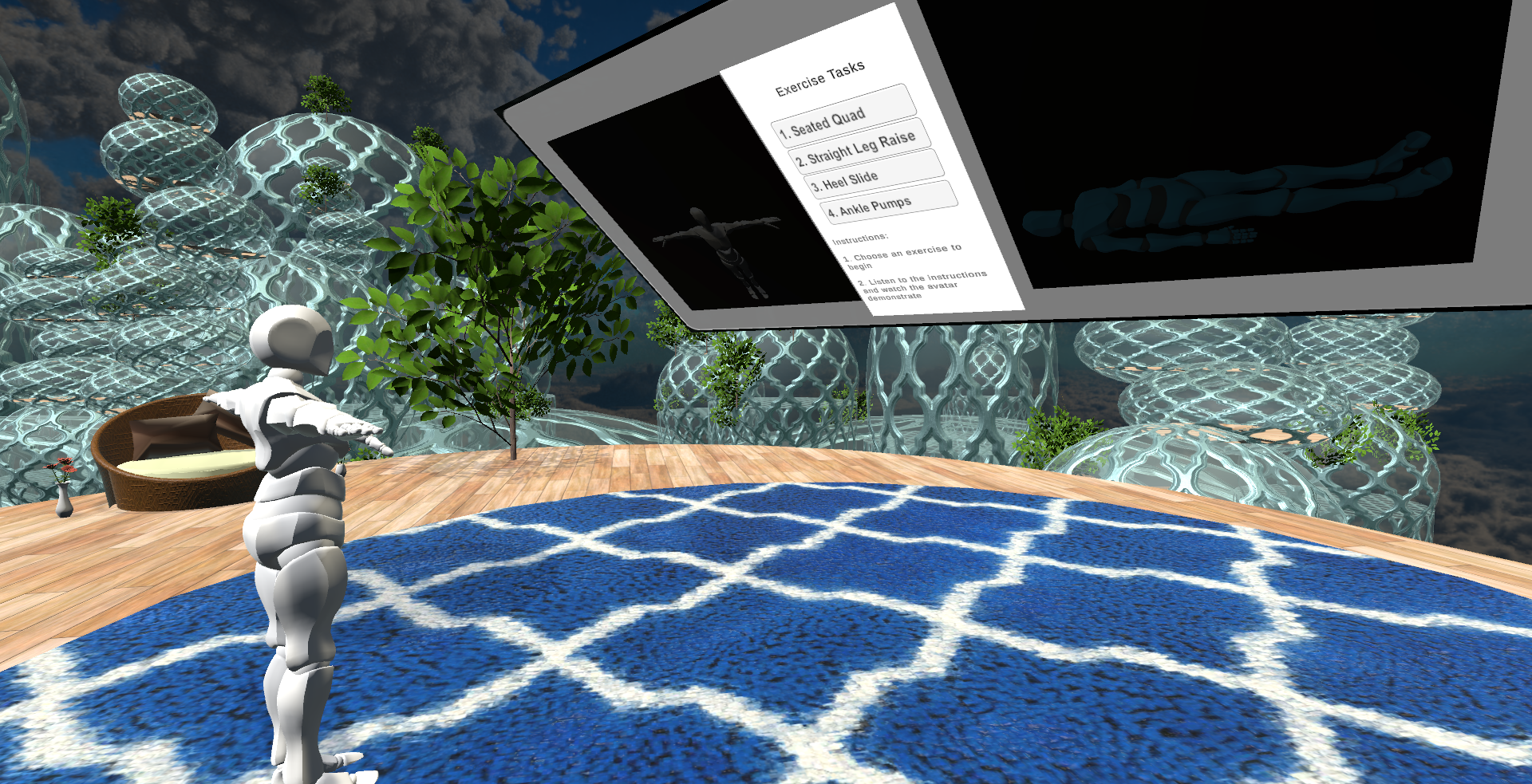
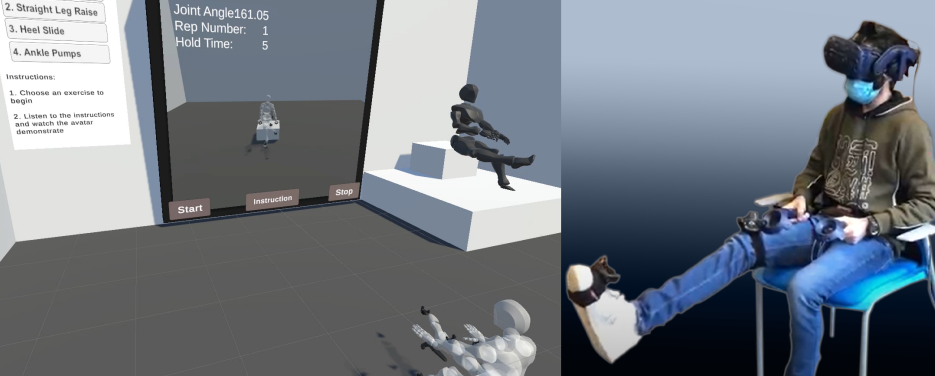
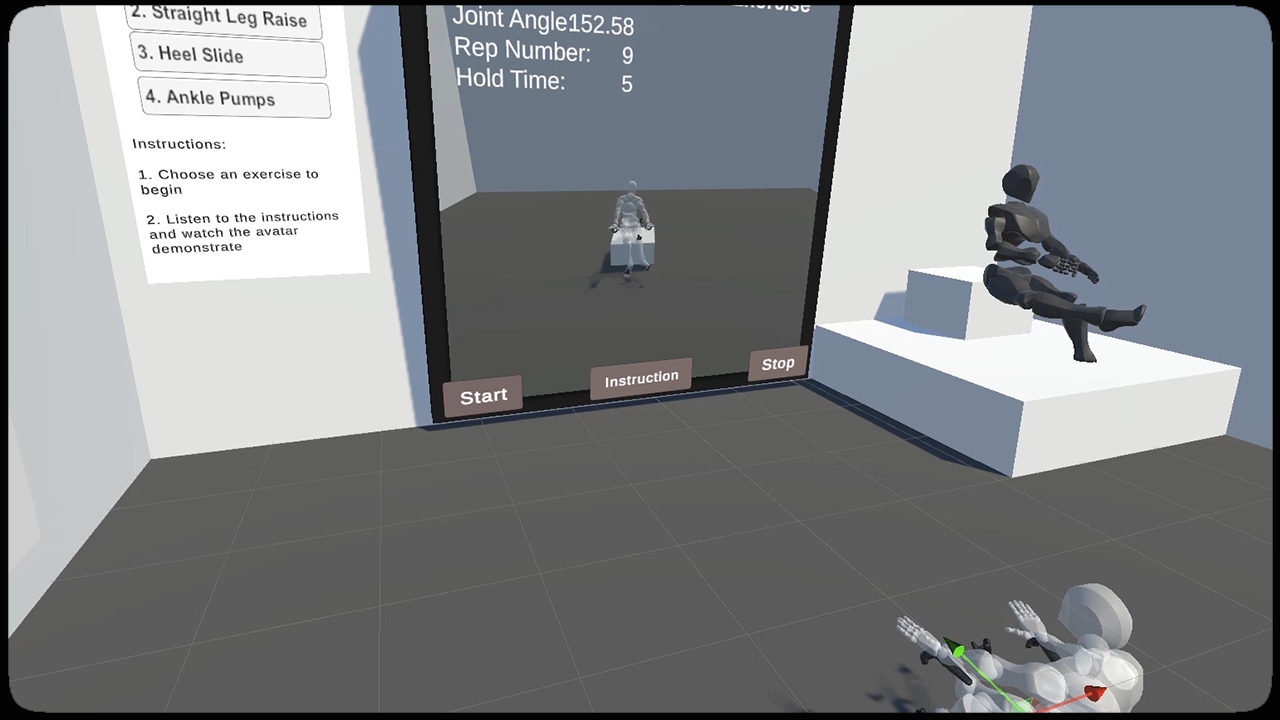
Chrysalis is a virtual reality lower-body physical training simulation. The game utilizes HTC Vive trackers to mirror a player’s physical body in the digital world and track the player’s movement to guide them through their physical therapy routine.
This game is being developed through a collaboration between Northeastern University and Massachusetts General Hospital.
Role: Programmer
Time on Project: August 2021 - April 2022
Engine/Language: Unity | C#
Platforms: HTC Vive
Link: IEEE Publication
Contributions
Developed exercise and leg position tracking system
Implemented dynamic exercise rules based on players’ range of movement
Integrated inverse kinematics body calibration feature
Lessons
Chrysalis is the first virtual reality game that I’ve worked on and was my gateway to applied game development. As such, this game taught me the basics of VR game development in Unity. The game also made use of the HTC Vive trackers, IMUs compatible with the HTC Vive VR headset, which made me intimately familiar with the different VR packages that Unity provides. Due to hardware bugs, I also needed to become familiar with troubleshooting both the headset and trackers, as they often malfunctioned during gameplay.
Due to the nature of the game as a physical therapy simulator, this also taught me a lot about usability and accessibility. We needed to make sure that this game was accessible and accommodating to those with lower body injuries. As such, all exercises are guided with the expectation that players are seated or lying down.